Exercise During Your Period: Balancing Movement, Pain and Energy
Is it safe to work out on your period, does it help cramps and does cycle-based training work? We also talk about periods stopping with too much exercise.
 HeyMom Editorial Team 🏋️ Cycle Health 4 min read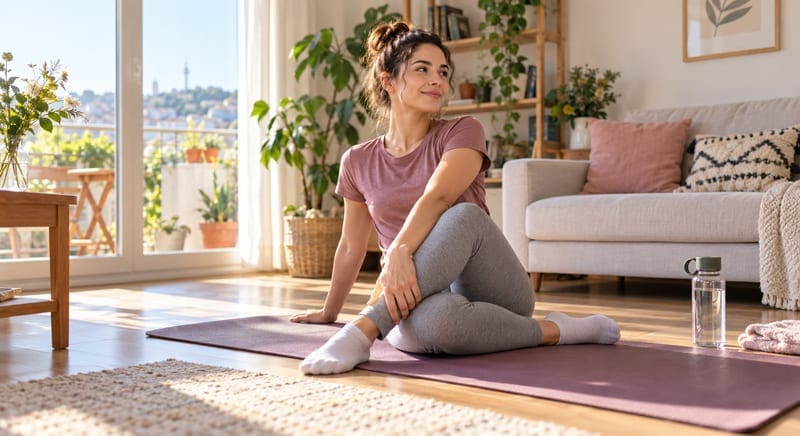
On your period days, you may want to curl up on the couch and not move at all, and that is very understandable. But rest assured: moving during your period is safe and can often even make you feel better. In this article, let's talk about the link between periods and exercise, what science really knows and when you need to be careful.
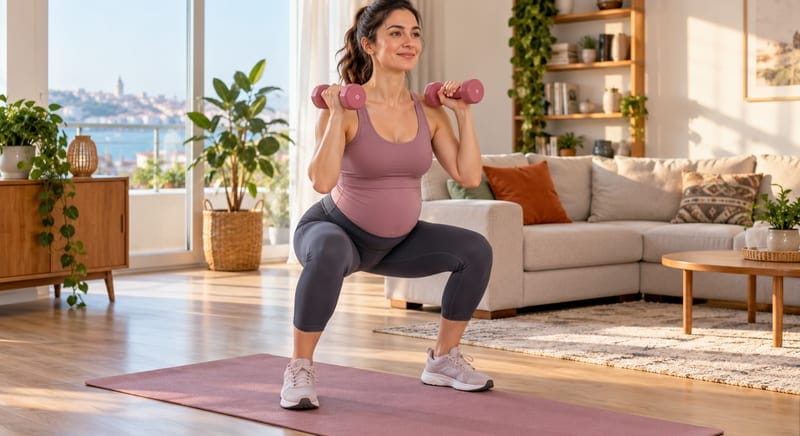
Is it safe to exercise on your period? Yes. The American College of Obstetricians and Gynecologists (ACOG) describes periods as a normal and healthy part of life and lists exercise among the ways it recommends to ease period cramps. You just need to adjust the pace to how you feel. Some days a light walk may suit you, other days your usual workout.
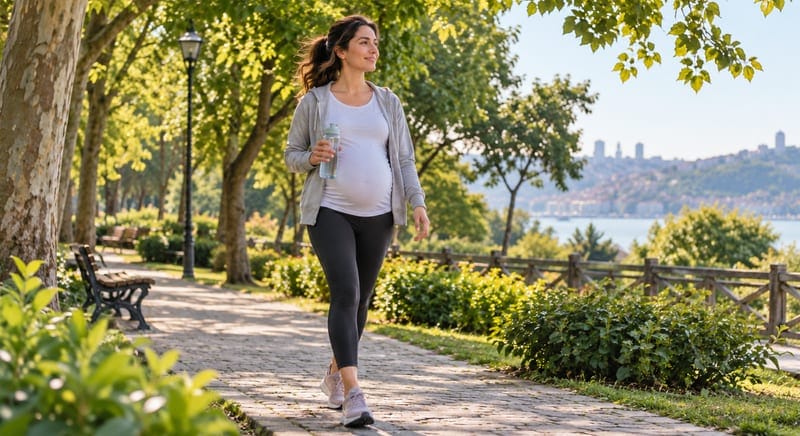
It can help cramps: ACOG notes that exercising on most days of the week can help you feel better when you have period pain. Aerobic exercise such as walking, jogging, cycling or swimming helps the body produce chemicals that block pain. Other ACOG tips you can try at home:
- Putting a hot water bottle or heating pad on your belly, or taking a warm bath
- Getting enough sleep before and during your period
- Relaxing with meditation or yoga
Cycle-based training: what does science say? "Train by your cycle phase" programs are very popular on social media. To be honest, the evidence on this is weak. A comprehensive systematic review and meta-analysis published in 2020 found that exercise performance may drop only by a very small, trivial amount in the first days of a period compared with other phases. The researchers said general rules cannot be set because the effect is so small, the studies differ widely and many studies are of low quality. Their recommendation is for each person to take a personal approach based on how their own body responds. So listen to yourself more than to the calendar.
Swimming and period products: ACOG lists swimming among the aerobic exercises that can help with period pain, so you can swim on your period days too. Because tampons and menstrual cups collect blood inside the vagina, you can use them instead of pads while swimming. According to ACOG, you should change a tampon at least every 4-8 hours, and you may need to change it more often if your bleeding is heavy. Leaving a tampon in for a long time has been linked to a serious infection called toxic shock syndrome. A menstrual cup is emptied every 8-12 hours. Period underwear can also be used on its own or together with a tampon, pad or menstrual cup for extra protection.
Do not forget iron: According to the UK's National Health Service (NHS), heavy periods are one of the most common causes of iron deficiency anemia. If your periods are heavy and you often feel tired, talk with your doctor. Iron-rich foods listed by the NHS include dark green leafy vegetables, iron-fortified cereals and bread, meat, dried fruits such as dried apricots, prunes and raisins, and legumes such as beans, peas and lentils.
Too much exercise, too little energy: Movement is good, but balance matters. According to the American Academy of Family Physicians (AAFP) patient guide, "relative energy deficiency in sport" (RED-S) happens when the energy you burn is more than the energy you take in. This imbalance can come from intense exercise or not eating enough, on purpose or without realizing it. It used to be known as the "female athlete triad." Long-term energy deficiency can lead to tiredness, irregular or missed periods, bone and muscle injuries and, over time, bone loss.
Which signs should you watch for? Some of the symptoms listed by the AAFP:
- Irregular or completely missed periods
- Constant tiredness and weight loss
- Stress fractures and repeated muscle and tendon injuries
- Sensitivity to cold
- Anxiety or depression, and problems with sleep and concentration
Those who do sports that emphasize being thin, those focused on a certain body image and those who exercise excessively are at higher risk. To protect yourself, the AAFP recommends a balanced diet with enough fat, carbohydrates and protein, matching how much you exercise to how much you eat and giving yourself time to rest.
When should you see a doctor?
- Your period has stopped for more than 3 months, or it has been coming irregularly for a few months after being regular (if you have had sex, consider the possibility of pregnancy first)
- Cramps do not go away despite treatment or keep you from doing your daily activities
- Your bleeding is so heavy that you need to change your pad or tampon every 1-2 hours
- Your period lasts longer than 7 days
- You have thoughts about your eating habits or weight that wear you down
If heavy bleeding comes with lightheadedness, dizziness or a racing pulse, see a doctor right away. If you have chest pain or faint during exercise, call your local emergency number without waiting.
Dear woman, on your period days, your body tells you what it needs. Sometimes a brisk walk, sometimes just stretching and rest. Both are valuable. See movement not as an obligation but as a way of taking care of yourself.
Tools that help with this topic
Free and opens right in your browser. Sign in and your records match the ones on your phone.