Eating While Breastfeeding: Caffeine, Alcohol, Smoking and Medicines
Do you need a special diet while breastfeeding, how much coffee is okay and what should you watch for with alcohol and medicines? A nutrition guide based on NHS and CDC advice.
 HeyMom Editorial Team 🍎 Newborn 5 min read
Once you start breastfeeding, it is completely natural to wonder whether everything you eat passes to your baby. According to recommendations from the UK's National Health Service (NHS) and the US Centers for Disease Control and Prevention (CDC), the good news is that you do not need to follow a special diet while breastfeeding. Still, a few topics need a little attention.
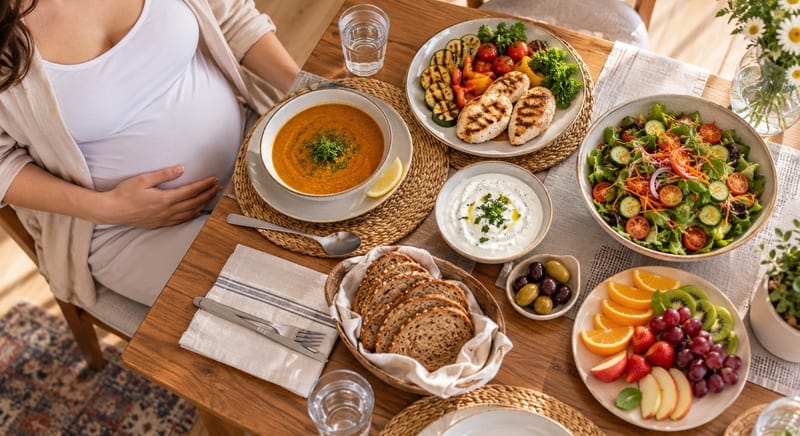
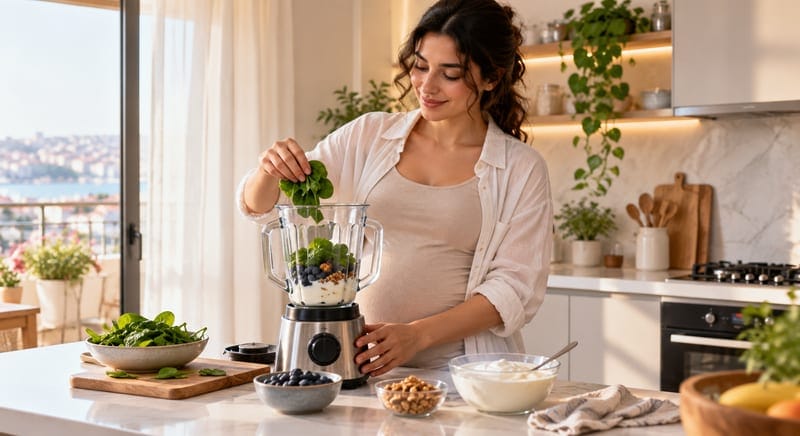
No special diet, just variety: The CDC says breastfeeding women generally do not need to limit specific foods. The healthy plate the NHS recommends looks like this:
- At least 5 portions of fruit and vegetables a day, in different colors
- Starchy foods such as potatoes, bread, pasta and rice, whole grain when possible
- Plenty of fiber: some women get constipated after birth, and fiber helps
- Protein sources such as legumes, fish, eggs and lean meat
- Milk and dairy products
- Plenty of fluids: keep a glass of water next to you when you sit down to breastfeed.
A little more energy: The CDC recommends that well-nourished breastfeeding moms take in about 330-400 extra calories a day compared with before pregnancy. This need varies with your age, body mass index, how active you are and whether you feed your baby only breast milk or breast milk along with formula.
Vitamins: The NHS recommends that everyone, including breastfeeding women, consider taking a daily vitamin D supplement in the fall and winter months. According to the NHS, most other vitamins and minerals can be covered by a varied, balanced diet. The CDC also notes that the need for vitamin B12, folate, vitamins D and A, iodine and choline increases while breastfeeding. If you eat a vegan diet, B12 is especially important: the CDC says the milk of moms who eat no animal products at all may have very little B12, and this can lead to nervous system damage in the baby. Decide together with your doctor whether you need a supplement.
Fish and mercury: The NHS recommends eating at least 2 portions of fish a week while breastfeeding, one of which should be oily fish such as mackerel, sardines, trout or salmon; a portion is about 140 grams (about 5 oz). Oily fish should be limited to no more than 2 portions a week, and shark, swordfish and marlin to no more than 1 portion a week. The CDC reminds moms that most fish contain mercury, which can pass to the baby through milk and can affect the baby's brain and nervous system, so low-mercury types should be chosen.
Caffeine: Caffeine passes to your baby through your milk; according to the NHS, if you have too much, your baby may become restless and have trouble sleeping. The NHS notes there is not enough information to say how much caffeine counts as too much; still, it recommends no more than 200 mg a day while breastfeeding and says it is a good idea to cut back, especially while your baby is under 6 months. According to the NHS's examples, a mug of coffee has about 90 mg of caffeine, a mug of tea about 55 mg, green tea about 38 mg, a can of cola about 37 mg and a 250 ml (8.4 oz) energy drink about 80 mg. The CDC, on the other hand, says that low to moderate amounts, up to about 300 mg a day, usually do not affect the baby, but that premature and newborn babies clear caffeine more slowly. When the organizations give different numbers, going by the lower one is the most cautious approach.
Alcohol: The NHS notes that the Royal College of Midwives recommends that the safest approach while breastfeeding is to avoid alcohol completely. If you have an occasional drink:
- According to the NHS, an occasional drink is unlikely to harm your baby, especially if you wait at least 2 hours after drinking before breastfeeding.
- According to the NHS, in a social setting you can try pausing breastfeeding for 2-3 hours for each drink; do this after breastfeeding is established and express and store milk ahead of time.
- You do not need to pump and dump to clear alcohol from your milk; as the alcohol in your blood goes down, so does the alcohol in your milk.
- The NHS notes that drinking heavily on a regular basis can reduce your milk supply and lead to problems with sleep, growth and development in your baby.
Alcohol and sleep safety: The NHS is very clear: if you have had any amount of alcohol, never sleep in the same bed or on a sofa with your baby; this is strongly linked to sudden infant death syndrome (SIDS). According to the NHS, drinking more than 6 units of alcohol in one sitting can make it harder for you to notice your baby's needs; in that case, an adult who has not had any alcohol should look after the baby.
Smoking: According to the NHS, quitting smoking after your baby is born helps protect them from sudden infant death, breathing problems, ear infections and hearing loss. If you are finding it hard to quit, do not stop breastfeeding; breast milk still protects your baby from infections. The NHS also recommends keeping your home completely smoke-free, not smoking right before breastfeeding and not sleeping in the same bed as your baby if you or your partner smoke.
Medicines and herbal products: The NHS recommends always telling your doctor, dentist or pharmacist that you are breastfeeding when talking about medicines. Small amounts of the medicines you take can pass into your milk, but these amounts are usually very low, and only a few medicines are unsafe while breastfeeding. Still, according to the NHS, codeine, decongestants taken by mouth, aspirin as a painkiller and herbal products are usually not recommended while breastfeeding; there is not enough information about the safety of herbal products. If your baby was born prematurely or had jaundice at birth, tell your doctor that too. Do not stop your prescription medicines without talking to your doctor.
When to talk to a doctor or pharmacist?
- Before using any medicine, herbal product or supplement.
- If your baby seems noticeably restless and sleepless after you have had caffeine.
- If you eat a vegan or restricted diet.
- If you are struggling to cut back on alcohol or want support to quit smoking.
Dear mom, you do not need a perfect diet, just a balanced and enjoyable one. Taking good care of yourself is one of the best kinds of support you can give your baby. Keep a glass of water by your side, do not skip meals and do not hesitate to ask about anything on your mind.
Tools that help with this topic
Free and opens right in your browser. Sign in and your records match the ones on your phone.