Folic Acid and Preconception Vitamins Guide
Which supplement, when to start, is there overdose risk? Evidence-based preconception vitamin protocol.
 HeyMom Editorial Team 🍎 Planning a Baby 3 min read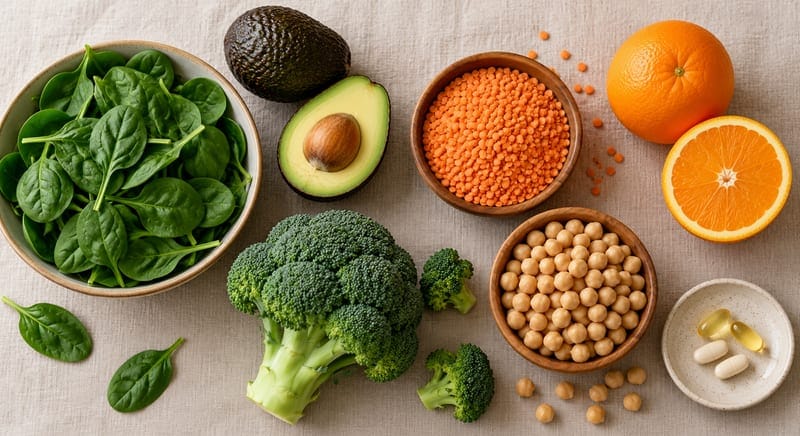
Folic acid (vitamin B9) is the most important supplement to start before conception: at least 1 month, ideally 3 months, ahead. Reason: the neural tube (spinal cord and brain) closes around week 3-4 of pregnancy — most women do not know they are pregnant at that moment. Folic acid started at the right time reduces neural tube defects by 50-70%.
Dose recommendations:
- Standard risk: 400-800 mcg/day (start at least 1 month before, continue until week 12)
- Previous pregnancy with neural tube defect: 4 mg/day (prescription)
- Diabetes, epilepsy (anticonvulsants), obesity (BMI >30): 1-5 mg/day, doctor-prescribed
- MTHFR gene variant: Standard folic acid is enough for most people; a different form is only recommended if your doctor sees a specific reason (see below)
- Twin/triplet pregnancy: 1 mg/day
Folic acid vs folate (food folate):
- Folic acid: synthetic form, in supplements and fortified foods. Body converts to active form in liver.
- Folate (food): green leafy vegetables, broccoli, lentils, chickpeas, avocado, citrus. Natural form but variable absorption.
- The MTHFR gene variant is common in the population, but according to current guidelines (CDC, ACOG) these people can also process folic acid; the proven form for preventing neural tube defects is folic acid. Routine MTHFR testing is not recommended; methylfolate should only be used if your doctor recommends it for a specific reason.
Preconception multivitamin content (start 3 months before):
- Folic acid/methylfolate 400-800 mcg
- Vitamin D 1000-2000 IU
- B12 (cyanocobalamin or methylcobalamin) 2.4-1000 mcg
- Iron — only if your ferritin is low or your doctor recommends it (see below)
- Iodine 150-220 mcg
- Calcium 1000 mg (can also be from diet)
- Zinc 11-15 mg
- Omega-3 (DHA) 200-300 mg — brain development
- Choline 450 mg — brain development (frequently missed supplement)
Supplements to avoid:
- High-dose vitamin A (>10,000 IU): Teratogenic, birth defect risk. Beta-carotene form is safe.
- High-dose vitamin E (>400 IU): Risk unclear
- Herbal formulas: Not automatically safe because it says "preconception" — avoid black cohosh, dong quai, ginseng
- Mega-dose B6 (>100 mg): Nerve damage risk
- Detox products, weight loss supplements: Stop 3 months before pregnancy
Iron supplementation debate: Iron is not prophylactically recommended for everyone. Start iron if ferritin <30 ng/ml. Can cause nausea, constipation — take with food, with vitamin C (increases absorption), avoid tea/coffee (decreases absorption). Iron + calcium should not be taken together (competition).
Iodine deficiency: Some regions have low dietary iodine, and pregnancy raises iodine needs. Iodized salt helps but may not be sufficient. Dairy and seafood are iodine sources. Deficiency affects fetal brain development. Make sure your prenatal multivitamin contains 150 mcg iodine.
Vitamin D deficiency screening: Common in many populations (especially with limited sun exposure or in winter). Get 25-OH-D test, <20 ng/ml deficiency, 20-30 insufficiency. You may need 1000-4000 IU/day dose. Target >30 ng/ml. D deficiency increases gestational diabetes and preeclampsia risk.
Supplements for the partner: Co-Q10 200-400 mg, zinc 25-50 mg, selenium 100 mcg, vitamin C+E, folic acid 400 mcg (for sperm DNA integrity), omega-3. Must start 3 months before — sperm production cycle is 72-90 days.
Brand selection: Pharmacy prenatal multivitamins are sufficient. Side effect: nausea is common — take with food, try split dose, take at bedtime. If you cannot swallow, gummy form is available but does not contain iron/calcium.
Tools that help with this topic
Free and opens right in your browser. Sign in and your records match the ones on your phone.


