Eczema in Babies (Atopic Dermatitis): Moisturizing, Baths and Warning Signs
What eczema looks like in babies, why moisturizer is the basic treatment and how to bathe your baby, plus triggers, signs of infection and emergencies.
 HeyMom Editorial Team 💧 Newborn 5 min read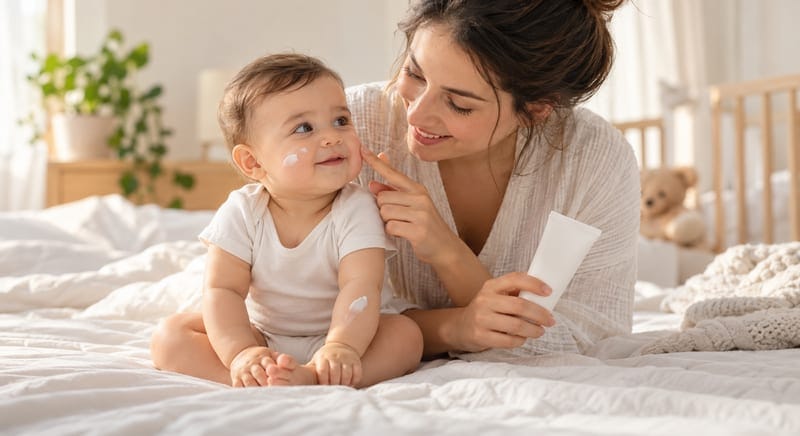
When red, dry, rough patches appear on your baby's cheeks, especially if they get itchy and restless at night, it eats away at you. Eczema is a very common skin problem in young children, and with the right care it can usually be kept well under control. This guide is based on recommendations from the NHS, the American Academy of Pediatrics (AAP) and the UK's National Institute for Health and Care Excellence (NICE).
What is eczema? According to the NHS, atopic eczema is a common condition that makes the skin itchy, and it is most common in young children. The AAP says up to 1 in 4 children has eczema. Eczema is not contagious. According to the NHS, it cannot be cured completely, but symptoms can be managed with treatment and often get milder as the child grows. According to the AAP, in some children eczema starts to go away around age 4. There can be flare-ups when symptoms get worse and periods when they are better.
Symptoms: According to the AAP, eczema in babies usually starts on the scalp and face; red, dry rashes can appear on the cheeks, forehead and around the mouth. It is usually not seen in the diaper area. According to the NHS, skin with eczema:
- Is itchy
- May be dry, cracked, crusty, scaly or thickened
- May look red, or lighter or darker than the surrounding skin, depending on skin tone
- May blister or bleed
Why does it happen? According to the NHS, the cause of eczema is not always known. A baby is more likely to have it if a parent has eczema, or if there is asthma or hay fever in the family. The AAP explains that in children with eczema, the skin's protective barrier is weak.
The basic treatment: Moisturizer (emollient). The NHS recommends applying moisturizers as often as possible, at least twice a day, and continuing even when the eczema gets better. According to the AAP, the thicker the moisturizer, the better it works; ointments like petroleum jelly and fragrance-free creams work better than lotions. The NHS recommends not dipping your fingers into the moisturizer container, using a spoon or pump instead, and not using aqueous cream, because it can irritate the skin. Clothing and bedding with moisturizer on them can catch fire more easily, so stay away from open flames.
How should baths be? The AAP's recommendations:
- A 5-10 minute lukewarm bath every day or every other day
- Soap is not needed; if needed, use only a gentle, fragrance-free, soap-free cleanser
- No bubble baths and no scrubbing with a rough washcloth
- After the bath, pat the skin dry with a towel
- While the skin is still damp, apply moisturizer to the whole body right away
The NHS also recommends washing with an emollient instead of soap.
Stay away from triggers: According to the NHS and the AAP, things that can make eczema worse include:
- Soap, fragranced products and detergents
- Wool and synthetic fabrics
- Heat, sweating and sudden changes in temperature
- House dust mites, pollen and pets
- Tobacco smoke
- Stress
- Skin infections
The AAP recommends soft 100 percent cotton clothing and a fragrance-free, mild laundry detergent, and says not to use fabric softener.
Coping with the itch: The NHS reminds parents that scratching makes eczema worse. Keep your baby's nails short, use scratch mittens so they do not damage their skin, and keep them cool, because heat makes the itch worse. The AAP also says cotton mittens at night may help. If eczema does not improve with moisturizer, your doctor may recommend prescription steroid creams that are applied to the skin; the NHS lists these among the main treatments. According to the AAP, these medicines are very effective and safe when used correctly. Your doctor decides which cream to use and for how long; do not buy and apply a steroid cream on your own.
The link with food allergy: According to the AAP, many children with eczema also have a food allergy, but foods themselves do not cause eczema. The NHS recommends not changing your baby's diet, or your own diet if you are breastfeeding, unless your doctor tells you to. The AAP also notes that rarely, certain foods can make eczema flare up; if you suspect this, talk to your doctor before starting a restrictive diet.
Infected eczema and eczema herpeticum: According to the NHS, if eczema blisters, crusts over, leaks fluid or develops pus-filled spots, is painful, swollen or hot, suddenly gets worse, or if there is a fever and your baby feels generally unwell, this may be a sign of an infection or a more serious condition called eczema herpeticum. According to NICE, eczema herpeticum is the cold sore virus spreading across skin with eczema. Its signs are painful eczema that gets worse quickly, clustered blisters that look like the early stage of a cold sore, round, punched-out sores 1-3 mm across, and fever, lethargy or irritability. NICE notes that if it is not treated, a child's condition can get worse quickly and it can lead to blindness and death.
When to see a doctor, when to go to the emergency room? If your baby has signs of eczema or treatments are not working, see your family doctor or pediatrician (NHS). If you see the signs of infection above, see a doctor the same day; the NHS recommends an urgent appointment in this case. If you suspect eczema herpeticum, especially if there are painful blisters spreading quickly, fever or lethargy, go to the emergency room without delay; NICE recommends same-day treatment and specialist assessment in this case. If the sores are around the eyes, an eye assessment should also be done the same day.
Dear mom, eczema is a road that takes patience, but you are not alone. The moisturizer you apply every day is a small but powerful protection you give your baby's skin. There will be good days and bad days; what matters is steady care and getting support when you need it.
Tools that help with this topic
Free and opens right in your browser. Sign in and your records match the ones on your phone.


