Screen Time from 0 to 3: How Much, How and What Instead?
When and how much screen time for babies and toddlers, plus video calls, watching together and rules for meals and bedtime, based on WHO and AAP guidance.
 HeyMom Editorial Team ⏰ Newborn 5 min read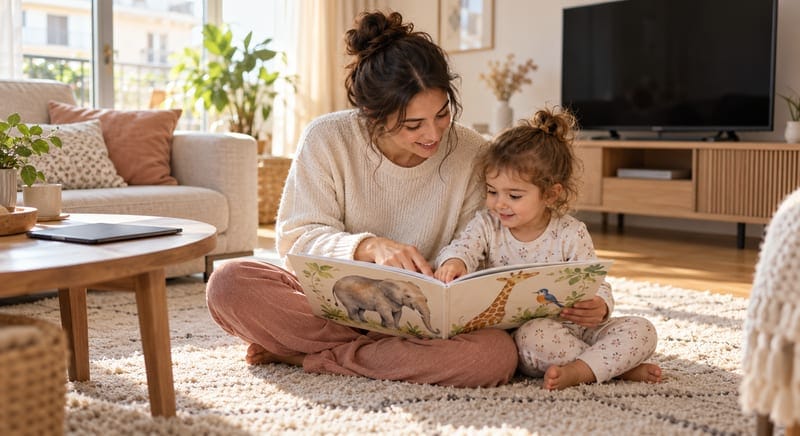
Phones, tablets, TVs: screens are in every corner of the house, and your baby gets interested in them very early. A few minutes of cartoons while you make dinner can be tempting. You do not need to feel guilty about this, but there are some things you should know. This guide is based on recommendations from the World Health Organization (WHO) and the American Academy of Pediatrics (AAP).
What does WHO say? According to WHO's 2019 guidelines on physical activity, sedentary behavior and sleep for children under 5:
- Babies under 1: Screen time is not recommended.
- 1-year-olds: Sedentary screen time, such as TV, videos or computer games, is not recommended.
- 2-year-olds: Sedentary screen time should be no more than 1 hour a day; less is better.
- 3-4-year-olds: No more than 1 hour a day; less is better.
WHO also recommends that children this age not be restrained for more than 1 hour at a time, for example in a stroller or high chair.
What does the AAP say? The AAP's 2016 recommendations did not consider digital media appropriate for babies under 18 months, because babies need real-world, face-to-face interaction with you and other family members to learn and grow. The only exception was video chatting. If screens were used at 18-24 months, watching programs together was recommended, and for older children, limiting screens to no more than 1 hour a day. In February 2026, with a new policy statement published in the journal Pediatrics, the AAP adopted an approach that replaces these older recommendations. It now recommends moving beyond simple time limits to focus on the quality of content, the context and talking with your child. Its current advice for babies is to limit screens, watch everything together and not let screens take the place of activities like play. Because the AAP's summary for families does not give a specific number of hours, WHO's numbers can give you a concrete framework.
Why does it matter so much? The AAP notes that children under 2 learn best by exploring their surroundings and playing with people, and that they have trouble understanding what they see on a screen unless an adult explains it. According to the AAP, too much screen time and a TV that is always on in the background have been linked to weaker language and social-emotional skills in young children. According to the AAP's 2026 policy, misuse of screens from 0 to 5 can lead to delays in language, thinking, social skills and fine motor development, to unhealthy sleep and to less time spent reading with loved ones, moving and exploring.
Video calls are fine: According to the AAP, video chatting with grandma, grandpa or a dad who is far away is not a problem. Tell your baby who the person on the screen is, repeat what they say and describe what is happening. Stay next to your baby during the call and include them in the conversation.
If they watch, watch together: According to the AAP, watching educational content or watching with a parent has been linked to gains in language skills. So:
- Choose high-quality, child-focused content.
- Sit with them and talk about what you see.
- Avoid using screens as a babysitter.
- Choose one shared family tablet instead of a separate tablet for everyone. The AAP recommends delaying a personal tablet.
No screens at meals or before bed: The AAP recommends screen-free meals. Eating in front of a screen can lead a child to keep eating even after they are full. The bedroom and the dinner table are the best places to keep screen-free. The AAP especially recommends keeping the hour before bed screen-free.
Your screen matters too: The AAP reminds parents that children watch and copy us. Put your phone down at meals and at bedtime, and show them through your own behavior how to take a break and spend time without screens. The AAP's free Family Media Plan tool can help you set rules that fit your household.
What can you do instead of screens? WHO stresses that when sitting time is spent on screen-free activities with an adult, such as reading, storytelling, singing and puzzles, it is very important for development. You can try:
- Floor play: for babies who cannot yet move around on their own, WHO recommends at least 30 minutes of tummy time spread throughout the day.
- Reading books together and talking about the pictures
- Songs, nursery rhymes and finger plays
- Playing with pot lids in the kitchen, going for walks outside, moving around at the playground
When to see a doctor? Screen time is not an emergency, but talk to your pediatrician or family doctor if:
- You are worried about your baby's speech, communication or social development
- Your child cannot calm down without a screen and this is hard on you
- You are struggling to set screen rules that work for your home
The AAP also acknowledges that challenges like long working hours or a lack of safe places to play can make it harder to avoid screens, and that this is not just a parenting issue.
Dear mom, you do not have to be perfect. Your baby's favorite screen is your face, and their favorite sound is your voice. Hours filled with a little more talking, play and books each day are the most precious gift you can give them.
Tools that help with this topic
Free and opens right in your browser. Sign in and your records match the ones on your phone.