Potty Training: When to Start and How to Go Step by Step
When to start potty training, the signs of readiness and what to do about accidents, including nighttime dryness and constipation, based on AAP and NHS guidance.
 HeyMom Editorial Team 😊 Newborn 5 min read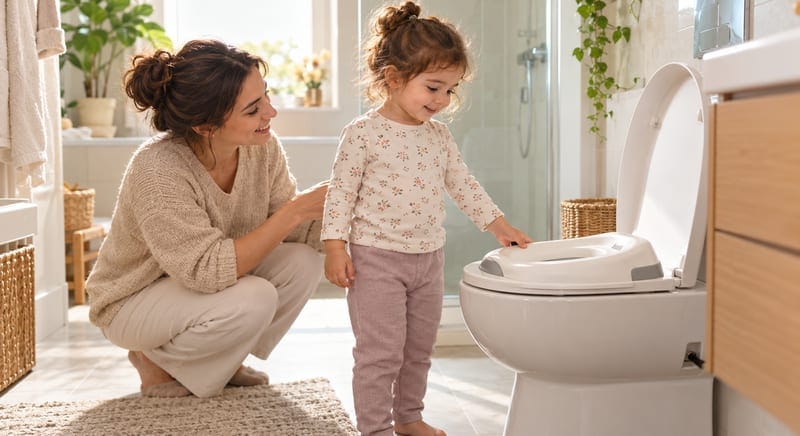
Saying goodbye to diapers is a big step for both you and your child. It takes time, practice and patience. As the NHS puts it, some children pick up new skills quickly, while others need more time and support. This guide is based on recommendations from the American Academy of Pediatrics (AAP) and the UK's National Health Service (NHS).
When to start? According to the AAP, children usually show the first signs of bladder and bowel control between 18 and 24 months. In the US, the average age to start potty training is 2-3 years, and most children learn to use the toilet by age 4. Although the AAP recommends looking for signs of readiness, it accepts that training can start whenever parent and child want. According to the NHS, almost all children can be potty trained between 18 months and 2.5 years. The NHS says you can start without waiting for your child to give signs or ask for it themselves, and that waiting for the perfect time may delay training longer than needed.
Signs of readiness (AAP):
- Stays dry for at least 2 hours during the day or wakes up dry from naps.
- Shows that pee or poop is coming by grunting, freezing in place or squatting.
- Can walk to the bathroom and help undress.
- Dislikes a wet diaper and wants to be changed.
- Wants to wear "big kid" underwear.
The NHS reminds parents that some children may not show these signs, and that this is completely normal.
Getting ready: The NHS's suggestions:
- Read books about the potty and show how to use it with a doll.
- Name pee and poop as they happen, so your child starts to recognize them.
- Change diapers in the bathroom if you can.
- Allow about 30 minutes of diaper-free time after a pee or poop.
- Choose a potty or a child toilet seat adapter with a step. When sitting on the toilet, their knees should be higher than their hips.
- Choose clothes that come off and go on easily.
Step by step: The NHS suggests five steps:
- Tell your child: Pick a relatively calm time in your life and tell them they will use the potty instead of diapers.
- Stop daytime diapers: Stop all daytime diapers, including pull-ups, and switch to underwear. Keep using diapers for naps and nighttime for now.
- Sit them on the potty regularly: Do not wait for them to tell you each time; make the potty part of the daily routine. The AAP recommends sitting them on the potty first thing in the morning.
- Praise their effort: Praise them for trying, whether or not they pee or poop.
- Build their confidence: Let them pull their underwear down and up themselves and choose which underwear to wear.
No punishment, no pressure: The AAP says to avoid negative words and that rewards and punishments distract children. According to the AAP, power struggles, begging and punishing keep a child from managing their own toileting. When they succeed, tell them clearly why you are proud. Here the two organizations differ: the NHS suggests small rewards such as stickers or a reward chart along with praise, while the AAP recommends avoiding rewards too and treating success itself as the reward. Both reject punishment and pressure. Some children fear the flush will take away a part of their body. The AAP suggests letting your child flush to give them a sense of control. Teach girls to wipe from front to back, and teach every child to wash their hands after using the toilet.
Accidents are normal: According to the NHS, accidents are an ordinary part of learning and happen to most children. Do not get angry; stay calm, clean up together and move on. The AAP says it may be good to pause training during big changes such as a move, a new sibling, a serious illness or a loss in the family.
Nighttime dryness comes later: According to the NHS, most children start staying dry at night after they have learned to stay dry during the day. This happens on its own over time and is not something that needs to be taught. Bedwetting is normal in children under 5. The NHS's suggestions:
- Make sure they drink enough water during the day.
- Have them use the toilet right before bed.
- Use a waterproof mattress cover.
- Do not give caffeinated drinks such as cola or tea.
- Do not punish them; it is not their fault.
Watch for constipation: According to the NHS, constipation is common especially around ages 2-3, during potty training. A child should have a soft poop at least every other day. Painful poops lead to fear, and the more a child holds in their poop, the worse the constipation gets, creating a vicious cycle. The NHS recommends getting help with constipation before stopping diapers. Having their feet flat on the floor or on a step while on the potty or toilet also makes pooping easier.
When to see a doctor? Contact your pediatrician or family doctor if:
- Your child poops fewer than 3 times a week, or their poop is large, hard or pellet-like
- They strain, are in pain or bleed when pooping
- Poop is leaking into their underwear: the NHS says this can be overflow due to constipation.
- They start wetting the bed again after being dry for more than 6 months
- Bedwetting continues despite what you have tried at home: the NHS notes that a condition such as diabetes or constipation can also cause it.
- You are worried about how training is going
Dear mom, potty training is not a race. Today might bring two accidents and tomorrow a dry day. Celebrate every small step together, and be gentle with yourself on the hard days too. Your child will take this step in their own time, with your patience and love.
Tools that help with this topic
Free and opens right in your browser. Sign in and your records match the ones on your phone.