Pacifier Use: When to Start and How to Keep It Safe
Pacifiers at sleep time, starting once breastfeeding is established, cleaning, ear and tooth health and when to stop: a safe pacifier guide based on AAP and NHS advice.
 HeyMom Editorial Team 🌙 Newborn 4 min read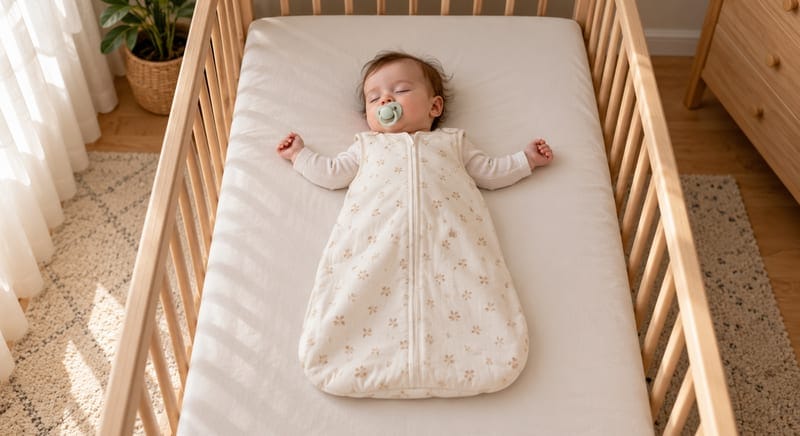
All babies are born with the need to suck. This reflex is necessary for feeding, and for some babies it is also soothing. If your baby wants to suck beyond feeding, a pacifier can meet this need. This guide brings together recommendations from the American Academy of Pediatrics (AAP) and the UK's National Health Service (NHS).
Pacifiers at sleep time and sudden infant death: The AAP says giving a pacifier at naps and nighttime sleep helps reduce the risk of sudden infant death syndrome (SIDS), and that this holds true even if the pacifier falls out of your baby's mouth after they fall asleep. You do not need to put a fallen pacifier back in. The NHS also says you may want to consider using a pacifier when putting your baby to sleep, and that some research shows it may reduce the risk of SIDS.
If you are breastfeeding, wait a little: The AAP recommends waiting until breastfeeding is well established before offering a pacifier; this usually takes about 3-4 weeks. Breastfeeding being established means: your milk supply is enough, breastfeeding is comfortable and regular, your baby latches well and is gaining weight as they should. If you are not breastfeeding your baby, you can start a pacifier whenever you like.
A pacifier should not replace a feeding: The AAP recommends not using a pacifier to delay or replace a feeding and offering it only when you are sure your baby is not hungry. If your baby does not want the pacifier, do not force it. You can try again later, but some babies never like pacifiers, and that is normal too.
Never tie it, never dip it in something sweet:
- The AAP says never to tie a pacifier to the crib or around your baby's neck or hand; this can cause serious injury or even death.
- Do not hang the pacifier around their neck or attach it to their clothing while they sleep.
- The NHS recommends not dipping a pacifier in anything sweet such as sugar or jam, and lists this among its tips for preventing tooth decay.
- According to the NHS, honey should not be given before age 1, because young babies cannot digest it safely. This includes dipping a pacifier in honey.
Choosing the right pacifier (AAP):
- Choose a one-piece model with a soft nipple; some models can come apart into two pieces.
- The shield should be at least 1.5 inches (about 3.8 cm) across so your baby cannot fit the whole pacifier in their mouth.
- The shield should be made of firm plastic and have air holes.
- Do not use a bottle nipple as a pacifier; if your baby sucks hard, the nipple can pop out of the ring and cause choking.
- Keep a few spares on hand; pacifiers get lost right when you need them most.
Cleaning and checking: The AAP recommends boiling the pacifier or running it through the dishwasher before the first use, following the manufacturer's instructions. Squeeze out any water left inside the nipple with clean hands; otherwise the hot water inside can burn your baby's mouth. Clean the pacifier this way often until your baby is 6 months old; after that, washing it with soap and rinsing with clean water is enough. Pacifiers wear out over time: if one is past its expiration date, has changed color or is torn, get a new one.
Ear infections and teeth: The NHS lists trying not to give your child a pacifier after 6 months among the steps that may help prevent ear infections. According to the AAP, if a child keeps sucking hard on a pacifier after age 2-4, it may affect the shape of the mouth and how the teeth line up. If a child stops before their permanent front teeth come in, their bite is likely to correct itself.
Be ready for night wakings: The AAP reminds parents that babies who depend on a pacifier to fall asleep may wake up when it falls out of their mouth. You do not need to put back a pacifier that falls out of a sleeping baby's mouth, but if your baby wakes up looking for it and is too young to find it and put it back in themselves, you may need to hand it to them.
Giving up the pacifier: The AAP's first suggestion is surprising but simple: ignore the habit, as most children stop on their own. Harsh words, teasing or punishment upset children and do not work. Instead:
- Praise and reward your child when they do not use the pacifier.
- You can try a star chart and gentle reminders during the day.
- If they suck out of boredom, keep their hands busy with an activity they enjoy.
- Whatever method you choose, explain it to your child; if it scares them or makes them anxious, stop right away.
When to talk to a doctor?
- If you notice changes in the roof of your child's mouth or in how their teeth line up, see your pediatrician or a pediatric dentist (AAP).
- If breastfeeding is not going well, or your baby does not seem to latch well or gain enough weight, talk to a health care provider before offering a pacifier.
- If you have any concerns about your child's health or development, do not hesitate to ask your doctor.
Dear mom, a pacifier is neither a must nor forbidden. When you start at the right time and follow a few simple rules, it can be a safe source of comfort for your baby. Whatever path you choose, you know your baby best.
Tools that help with this topic
Free and opens right in your browser. Sign in and your records match the ones on your phone.