Blood Pressure and Preeclampsia During Pregnancy
High blood pressure symptoms, risk factors, and prevention.
 HeyMom Editorial Team 🩺 Pregnancy 2 min read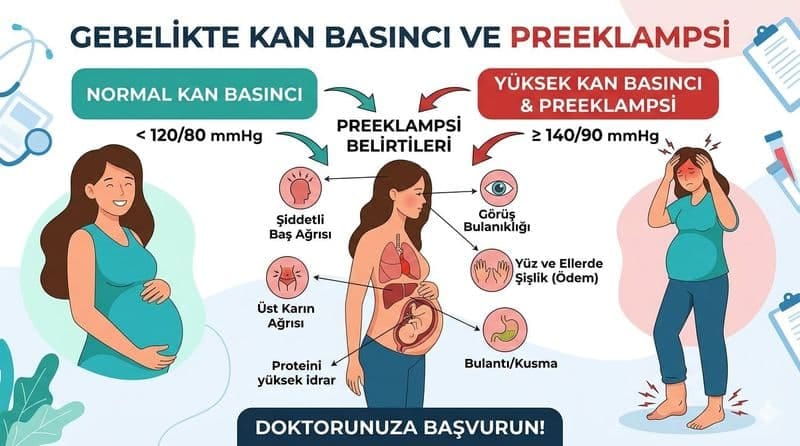
Preeclampsia is a condition that can occur after the 20th week of pregnancy, presenting with high blood pressure and protein in urine. While it occurs in a small proportion of pregnant women, early detection is possible through regular checkups.
Symptoms to be mindful of: Persistent headache, vision problems (blurred vision, light flashes), upper abdominal pain, sudden and noticeable edema (especially in face and hands), nausea and vomiting, shortness of breath. Especially if you notice a severe or persistent headache, vision problems, upper abdominal pain or sudden swelling of the face and hands, contact your doctor or maternity unit the same day, without waiting. If symptoms are severe or you are short of breath, call your local emergency number.
Risk factors include first pregnancy, being over 35, previous pregnancy with preeclampsia history, chronic hypertension, diabetes, kidney disease, obesity, and multiple pregnancy. If you're in a risk group, your doctor may recommend special precautions for you.
For prevention: Regular doctor checkups and blood pressure monitoring are the most important steps. Balanced nutrition, regular exercise, adequate water intake, and stress management can be helpful. Although avoiding excess salt is good for general health, salt restriction has not been shown to prevent preeclampsia. If you are in a risk group, your doctor may recommend evidence-based preventive measures such as low-dose aspirin.
Tools that help with this topic
Free and opens right in your browser. Sign in and your records match the ones on your phone.


