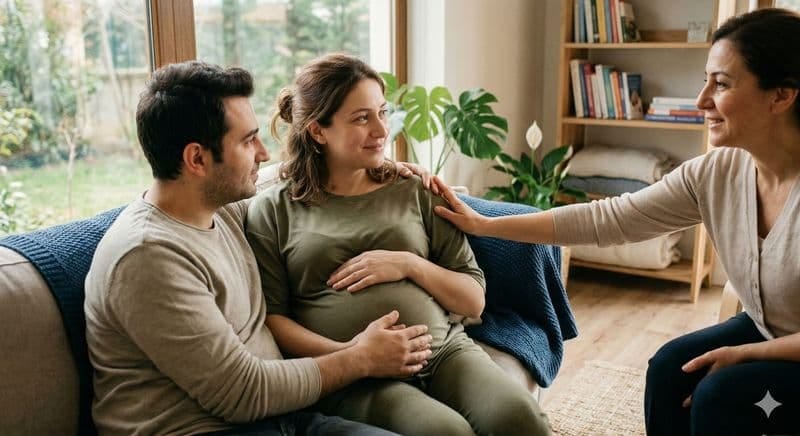
Postpartum Depression: Symptoms and Support
Difference between baby blues and postpartum depression, early diagnosis and treatment.
 HeyMom Editorial Team 😊 Pregnancy 2 min read
Postpartum depression (PPD) is a real mental health condition that affects many mothers and where getting help is very important. It should not be confused with "baby blues" (mild emotional fluctuations in the first 2 weeks after birth) — while baby blues resolves on its own, PPD requires support.
PPD symptoms may include persistent sadness and crying, disinterest in the baby or excessive worry, sleep problems, appetite changes, extreme fatigue, feelings of worthlessness and guilt. Experiencing these feelings is nothing to be ashamed of — this is a medical condition and seeking help is completely natural. If you have thoughts of harming yourself or your baby, this is an emergency: call your local emergency number or go to the nearest emergency department right away. You are not alone, and these thoughts get better with treatment.
Risk factors include previous depression history, depression during pregnancy, difficult birth experience, lack of social support, and sleep deprivation. PPD can affect mothers from every socioeconomic level and every culture — no one is immune.
PPD is treatable and the earlier treatment starts, the more effective it is. Psychotherapy (especially CBT), medication therapy (breastfeeding-compatible options are available), support groups, and regular exercise form the foundations of treatment. Asking for help is not weakness — taking care of your own health is the most powerful thing you can do for your baby.
Tools that help with this topic
Free and opens right in your browser. Sign in and your records match the ones on your phone.