Nutrition and Weight Gain in a Twin Pregnancy
Calorie needs, weight targets and key nutrients in multiple pregnancy, per IOM and ACOG.
 HeyMom Editorial Team 🍎 Pregnancy 2 min read
If you're expecting twins or triplets, your body is doing something truly extraordinary — and good nutrition is its biggest ally. Contrary to the "eating for three" myth, what matters most isn't quantity but quality: the right nutrients, at the right time, in amounts that are right for you. This guide is based on recommendations from the US Institute of Medicine (IOM) and the American College of Obstetricians and Gynecologists (ACOG).
Weight target: According to the IOM guidance for twin pregnancy, if your pre-pregnancy weight was in the normal range, the target total gain is 16.8-24.5 kg (37-54 lb); if overweight, 14.1-22.7 kg; if in the obese range, 11.3-19.1 kg. These ranges are noticeably higher than for a singleton — you're nourishing two babies, two placentas (or one large shared one) and more amniotic fluid. Your doctor will set the exact target that fits you.
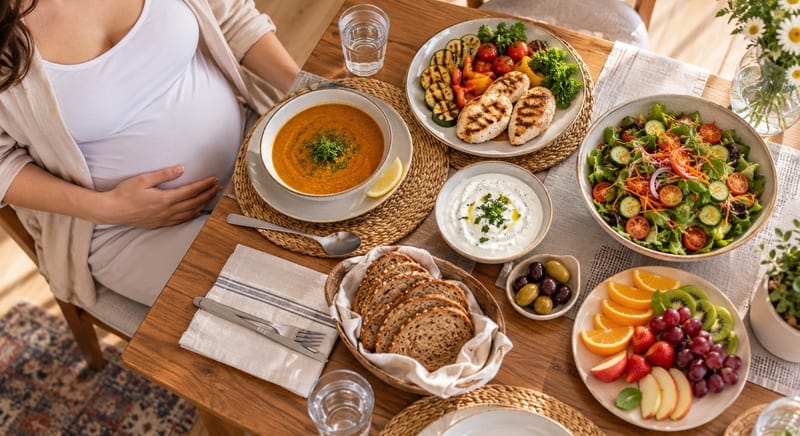
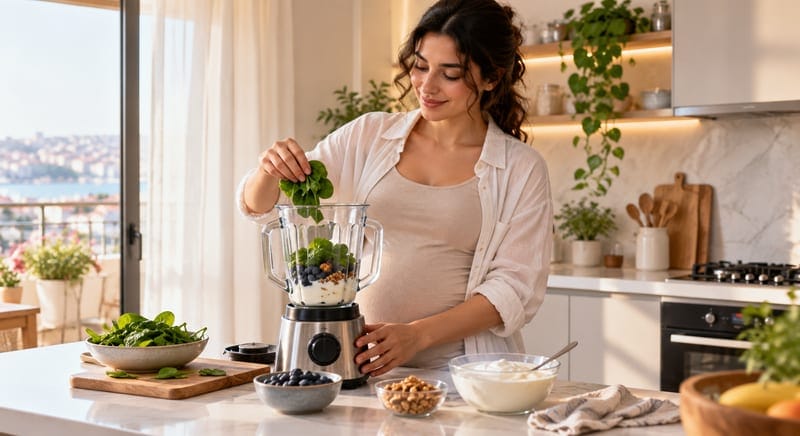
Calories: The commonly cited ACOG-based guidance is roughly 300 extra calories per baby per day — about 600 extra for twins. But as the growing uterus presses on your stomach early, big portions can feel hard. Five to six small meals a day ease reflux and keep blood sugar steady. Quality sources: eggs, yogurt, nuts, cheese, whole grains.
Iron and anemia: Because blood volume increases even more in a multiple pregnancy, anemia risk is more than double that of a singleton. Your iron levels will therefore be checked more often. Keep red meat, legumes and leafy greens on the table regularly; pairing them with vitamin C (orange, peppers) boosts absorption. Your doctor sets the supplement dose.
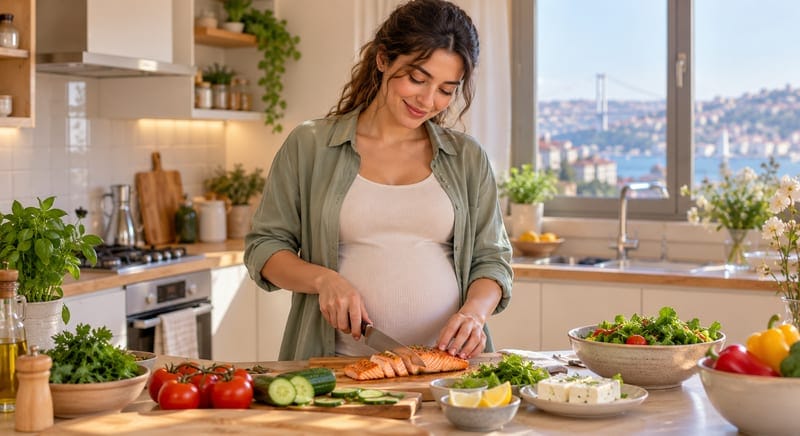
Other key nutrients: Folic acid matters even more when cell division is this intense — your doctor may recommend a higher dose than in a singleton pregnancy. Your protein needs rise (aim for a protein source at every meal). Calcium and vitamin D support two sets of growing bones, and omega-3 (DHA) supports brain development; 1-2 portions of low-mercury fish a week is a good option.
Water and practical tips: Drink plenty of water for the extra blood volume and amniotic fluid — dehydration can even trigger early contractions. If nausea is intense, small dry snacks can help. Dear mama, these numbers are a general framework; twin pregnancy care is personal, and the best plan is built together with the doctor who sees you regularly.
Tools that help with this topic
Free and opens right in your browser. Sign in and your records match the ones on your phone.