Pregnancy Planning with PCOS
Steps to increase the chances of conceiving with PCOS: lifestyle, medications, and expert support.
 HeyMom Editorial Team 🫀 Planning a Baby 3 min read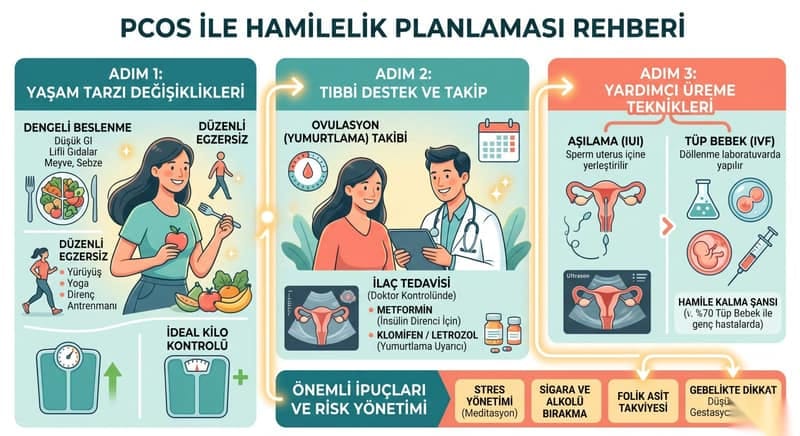
PCOS is the most common cause of infertility — due to anovulation (lack of ovulation). Good news: with the right approach, the vast majority of women with PCOS conceive. This guide covers evidence-based approaches starting from the preconception phase.
- Weight management (most powerful effect): Even 5-10% weight loss significantly improves insulin resistance, androgens, and ovulation. Spontaneous return of periods and conception chances increase noticeably in most women.
- Mediterranean diet evidence-based beneficial
- Low glycemic index (reduce refined carbohydrates)
- Portion control, intermittent fasting (with doctor approval)
- Regular aerobic + resistance training 150 min/week
- Folic acid and preconception vitamin: Start 3 months before pregnancy. Standard 400-800 mcg is enough for most people; if your BMI is over 30 or you have other risk factors, ask your doctor, as a higher dose may be needed. No increased neural tube defect risk in PCOS, but regular use is critical (anovulatory cycle = surprise pregnancy).
- Vitamin D and inositol:
- If vitamin D deficient, measure 25-OH-D, supplement 1000-2000 IU/day
- Myo-inositol + D-chiro inositol (40:1 ratio) — randomized studies show increased ovulation and pregnancy rates
- Dose: 4 g myo + 100 mg D-chiro/day, 3-month trial recommended
- Treatments that balance insulin resistance: Your doctor may prescribe a suitable treatment to support ovulation in PCOS with insulin resistance. Such treatments may need to be continued in early pregnancy under medical supervision — the decision rests with the physician who follows you.
- Ovulation treatment (1st line): Your physician may support the process with appropriate ovulation-stimulating medications. The treatment is followed with follicle ultrasound and ovulation monitoring; multiple-pregnancy risk is assessed in advance.
- 2nd line treatments (if 1st line fails after 3-6 months):
- Gonadotropin injection (FSH) — more aggressive ovulation
- Laparoscopic ovarian drilling — in selected cases
- IVF — if others fail or tubal/male factor coexists
- Risks to know:
- Gestational diabetes risk 3x increased — preconception control critical
- Gestational hypertension, preeclampsia risk increased
- Miscarriage risk may be somewhat higher, especially with excess weight — a healthy weight and appropriate medical support are reported to reduce it
- Preterm birth risk slightly increased
- Partner workup: Spermiogram is requested in every infertility evaluation. Male factor accompanies 30% of cases. Have partner reduce alcohol/smoking/hot bathing/tight underwear 3 months prior, there is some evidence that supplements like Co-Q10 may improve sperm quality; he can check with his doctor before taking them.
Dear woman, PCOS is a long-term condition but pregnancy is entirely possible. Patience + discipline + the right team (gynecology + endocrinology + nutrition expert) is the most effective combo. If no result after 6-12 months, see a reproductive specialist; apply earlier if 35+.
This content is for informational purposes only and is not a substitute for medical advice. Consult your doctor about anything related to your health.
Tools that help with this topic
Free and opens right in your browser. Sign in and your records match the ones on your phone.


